Building Resilient
Communities
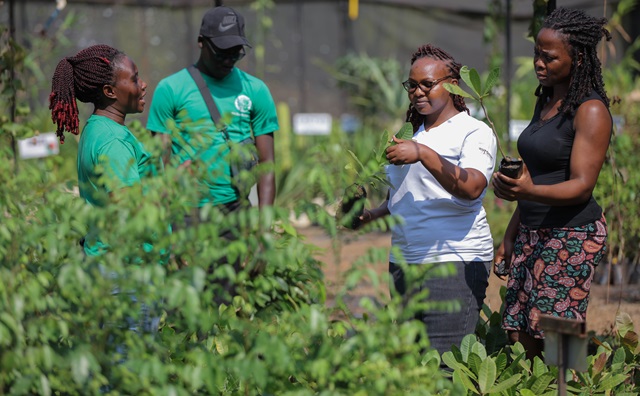
The agricultural sector, together with agribusiness, are projected to be a US$1 trillion industry in Sub-Saharan Africa by 2030. Agriculture has the potential to reduce poverty and improve food security more than any other sector and African universities have a direct role in driving that transformation.
SE4CD aims to ensure that Higher Agricultural Education (HAE) institutions are engaged in active learning that deliver agricultural leaders that will generate innovations, products & services, and accelerate processes that meet the needs and aspirations of agri-food system actors and contribute to shared prosperity in communities, societies and the economy. The program unit responds to Pan-African concerns whilst being adaptive to national and local priority needs. Thus, the program unit is alive to the need for universities to transition and transform from third generation to fourth generation universities, the need for jobs and wealth creation among young people-in school and out of school, and the need for inclusivity in learning institutions to on-board diverse demographies especially refugees, displaced persons and persons with disabilities. The unit also recognises the need for valorized knowledge, technologies, innovations and management practices for jobs and wealth creation, and the need for a connected education pipeline that leverages the strengths of TVET colleges for last-mile delivery. Further, the unit prioritizes the need to strengthen the capacity of youth serving organizations to better engage with youth in the continent as well as connect with the wider ecosystem actors including the private sector and policy and decision makers.
This theme focuses on enabling the emergence of stronger universities, and TVET colleges with focus on systems, processes, practices, people and standards. In particular, the unit engages universities in curriculum reform and pedagogy seeking to foster problem-solving, critical thinking, and experiential learning centered on problem solving. The unit also supports strengthening of universities’ leadership, collective will, management, and planning capacity, including evidence uptake, new models and interventions, and thought leadership. Further, the unit focuses on strengthening the safeguarding, inclusion and people including addressing key aspects around gender centered programing in universities.
This theme focuses on advancing agri-food systems development through the creation of agri-food systems and entrepreneurship centers as programs in the universities. Through these centers, the universities have the opportunity to broker opportunities and partnerships with other ecosystem actors necessary to valorize largely available technologies, innovations, and management practices generated within the universities and within the wider research innovation ecosystem. This theme also enables the collaborative engagement between universities and TVET institutions to accelerate last-mile delivery of productivity enhancing innovations. It also supports universities’ leadership and engagement position with agri-food system stakeholders including farming communities, private sector, policy and decision leaders in agricultural transformation as well as development partners.
This theme focuses on supporting universities and TVET colleges to prioritize and operationalize learning and training that facilitates entrepreneurship and business development leading to jobs and wealth creation by youth. The unit facilitates the processes of incubation and acceleration development as well as the provision of business development services. Further, it champions the integration of digital economy into university training processes as a pathway to engaging largely out of school skilled youth into offshore work out sourcing and for increasing youth transitions to paid employment.
Flagship Programme
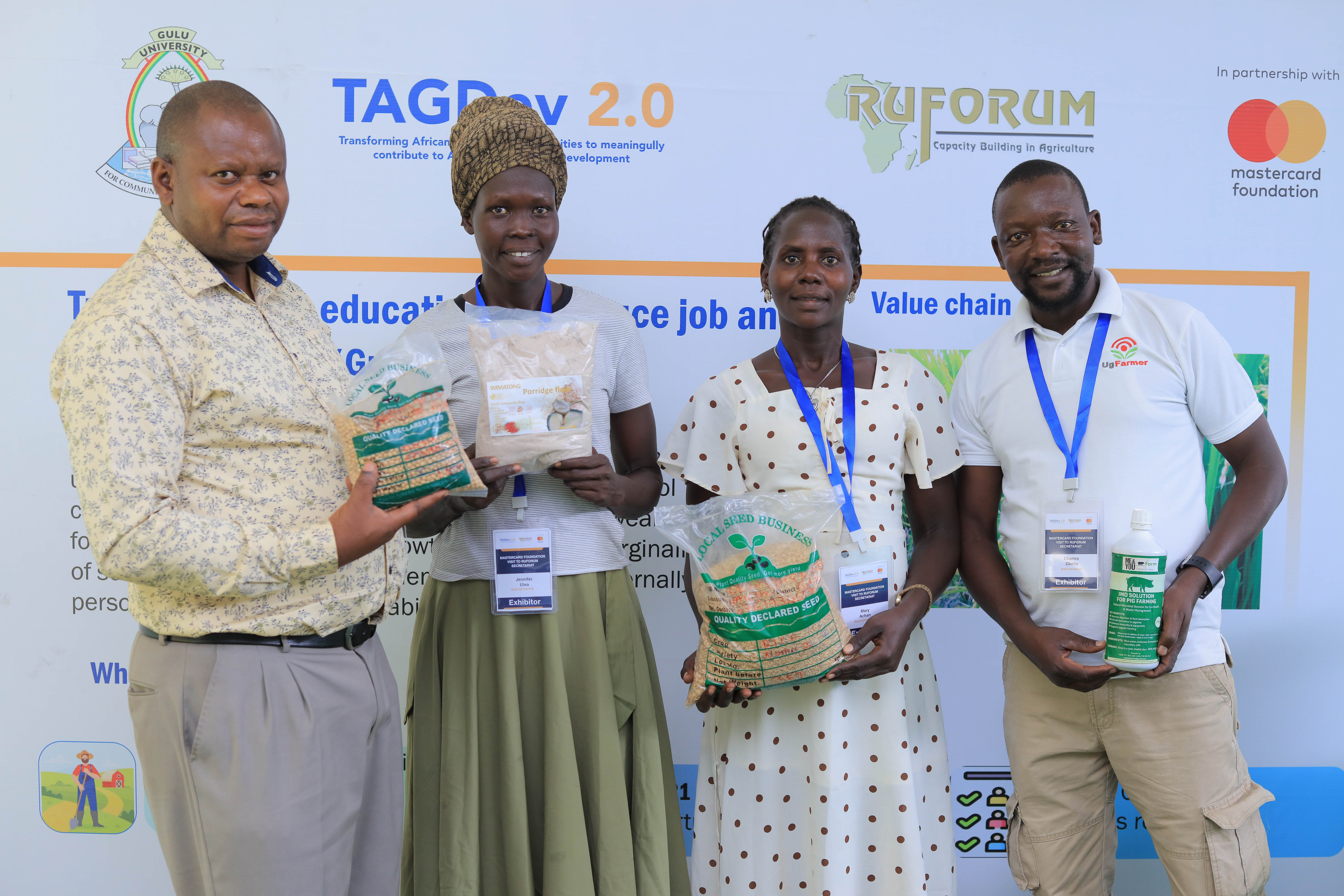
The Transforming African Agricultural Universities to Meaningfully Contribute to Africa’s Growth and Development (TAGDev) is now in its second phase as TAGDev 2.0. It started 2016-2024 (TAGDev 1.0) and transitioned to TAGDev 2.0 for the period 2023-2033.
The program seeks to strengthen universities and TVET institutions to better serve communities by skilling and empowering Africa’s young people and their institutions to drive inclusive, equitable and climate resilient transformation of agriculture and agrifood systems. The program is a result of a partnership between RUFORUM and Mastercard Foundation. It brings together 60 RUFROUM member universities in the delivery and implementation of various activities with the technical backstopping of Global Confederation of Higher Education Associations for Agricultural and Life Sciences (GCHERA) as a learning partner.
Learn MoreARCAA supports locally led action research that helps smallholder farmers in Kenya and Nigeria adapt to climate change, and accelerates the scaling and adoption of climate-smart innovations. Jointly coordinated by RTI International and RUFORUM with funding from the Gates Foundation, it awards 14 two-year research grants across seven thematic areas, from alternative livestock feed and biofertilizers to irrigation and digital advisory services.
Learn MoreAgrGROW is a partnership between agro-High Education Institutions (HEI) in Malawi (MW), Uganda (UG), Denmark (DK), Finland (FIN) and the Regional Universities Forum for Capacity Building in Agriculture (RUFORUM) for transformation of agro- entrepreneurship (agropreneurship) education. Based on the experiences of the consortia members, research done in partner HEIs and confirmed by the literature findings and policy documents, the lack of entrepreneurial mind-set hinders graduates` employability and prevents their capacity to employ or become entrepreneurs themselves.
Learn MoreAgrCBE project is a consortium project led by Gulu University involving European and African Universities funded by the European Union under the Erasmus+ window
Learn MoreSupporting co-generation of innovation to transform agricultural value chains through community action research and rural agro-business incubation hubs. This project is implemented in Uganda and Zimbabwe, by Nkumba University, Bishop Stuart University, and Uganda Martyrs University in Uganda, and the University of Zimbabwe and Chinhoyi University of Technology in Zimbabwe
Transcending boundaries in transformative education with a problem/challenge-based learning focus, adopting pedagogy grounded in community needs for agri-food systems development.
The AARIESI partnership framework aims to support Agricultural research, extension, and education initiatives to accelerate the application of science to create sustainable and decent livelihoods for African smallholder farmers, differently abled persons, women and the youth. The overall objective is to ensure that agricultural development and food systems in Africa are productive, profitable, offer products that are competitive in the global markets and are sustained by science-based solutions and interconnected world-class human resources and institutions.
Learn MoreAgrBizz is a consortium project led by Häme University of Applied Sciences (HAMK), Finland involving European and African Universities funded by the European Union under the Erasmus+ window.
Learn MoreA consortium project led by Polytechnic Institute of Porto, Portugal, involving European and African Universities funded by the European Union under the Erasmus+ window.
Learn MoreA partnership initiative under the DeSIRA Lift initiative funded by the European Commission (DG INTPA; 2021–2025), focused on translating university research into market-ready innovations for sustainable agri-food systems.
A partnership project with the Government of Uganda through the Science, Technology and Innovation (STI) Secretariat, supporting universities to commercialize academic research outcomes for job creation and economic development.
A consortium project led by Häme University of Applied Sciences (HAMK) in partnership with African Universities, integrating problem-based learning with bioeconomy entrepreneurship to build capacity for sustainable development across Africa.